What a Twice-a-Year Maintenance Visit Actually Checks, and Why Twice
A good maintenance visit is a documented inspection, not a quick look and a handshake.
October 14, 2026 · 4 min read
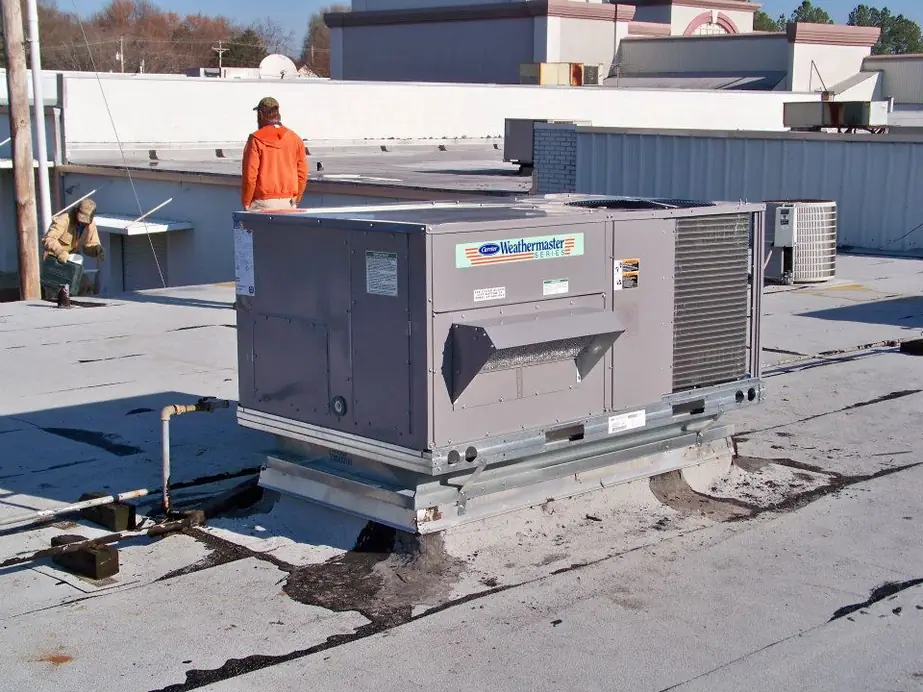
Most people only think about their heating and cooling when something stops working. That's understandable. The trouble is that the failures nobody wants, a dead air conditioner in July or a cold house in January, often start as small, boring problems that a routine visit would have caught months earlier. Here is what a maintenance visit really covers, and why the recommendation is twice a year instead of once.
Why twice a year
Your system carries two opposite jobs. In summer it moves heat out of your house. In winter it makes heat or moves it in. Each job leans on different parts. A cooling check looks hard at the outdoor coil, the refrigerant circuit, the condensate drain and the electrical parts that start the compressor. A heating check looks at ignition, burners, venting and heat exchangers on a gas furnace, or at the reversing valve, defrost controls and backup heat on a heat pump.
So the visit in spring gets you ready for the cooling season, and the visit in fall gets you ready for heating. Skip one and you're running half your system on faith. Richard Electric recommends service twice a year for exactly this reason, and its maintenance work is built around checking heating and cooling before the season that needs each one.
What the technician looks at
Every system is a little different, but a thorough visit covers the same ground. The idea is to verify that the system operates the way it should, and to find wear before it turns into a breakdown.
- Air filter: checked and replaced or flagged. A clogged filter strangles airflow and makes everything else work harder.
- Indoor and outdoor coils: looked at for dirt, matting and damage. A dirty coil can't pass heat well.
- Electrical connections and components: capacitors, contactors, wiring and terminals. Loose or burned connections cause a lot of no-start calls.
- Blower and motors: running smoothly, no strange noise or heat.
- Condensate drain: clear, so water doesn't back up into the pan or onto a ceiling.
- Refrigerant circuit: operating readings compared with what the equipment should show.
- Gas furnaces: ignition, flame, venting and the heat exchanger.
- Thermostat and controls: calling for the right thing at the right time.
Notice how much of that list is small. Nothing on it is dramatic. That's the point. A capacitor that's weakening costs very little to replace during a visit, and quite a bit more to replace after it takes a compressor down with it.
What a documented visit means for you
Richard Electric's process runs in three steps: scheduling, a documented on-site evaluation, and recommendations after the visit. The documentation matters. You end up with a record of what was checked and what the technician found, so next season's visit starts from facts instead of memory. If a part is getting weak, it's written down, and you can decide when to deal with it.
The recommendations are made without pressure. That's how it should be. A good technician tells you what needs attention now, what can wait, and what is simply worth watching, and then leaves the decision with you. If you ever feel a visit is turning into a sales pitch, say so.
How maintenance agreements work
Instead of calling for each visit, many homeowners and business owners set up a maintenance agreement. Richard Electric quotes agreements for residential and commercial customers, tailored to the building, on one-month, three-month, six-month or one-year terms. Customers on a maintenance plan also get a discount of ten percent on parts if a repair comes up.
The practical benefit is simple. The visits get scheduled rather than forgotten, the system gets looked at before the heavy seasons, and a technician who has seen your equipment before is the one who notices when something has changed. For a business, where a failed unit means a closed counter or a hot warehouse, that regularity is worth even more. Ask for a quote and compare it with what you'd spend chasing problems one at a time.
What you can do between visits
- Check your filter every month or so, and change it when it looks gray.
- Keep the outdoor unit clear of leaves, grass clippings and stacked items, with space around it.
- Make sure supply and return vents aren't blocked by furniture or rugs.
- Listen and look: new noises, ice on lines, water near the indoor unit, or a unit that cycles on and off quickly are all worth a call.
- Keep a note of the date you last had service.
None of that replaces a technician, but it keeps small things from getting bigger in between. It also gives you better information to share when you do call.
A system that's checked twice a year generally has a better chance of reaching the end of its 12 to 15 year life, and it tells you when that end is approaching so a replacement can be planned instead of forced in the middle of a heat wave. To set up a visit or ask about an agreement, call Richard Electric at (256) 600-0616 or read about the service at /routine-maintenance.
Richard Electric Company, Inc., (256) 600-0616
Call (256) 600-0616More articles
Heat Pump or Gas Furnace: What a North Alabama Winter Asks of Each
Both will keep a Cullman County house warm, but they get there differently, and your house decides which one fits.
Planning a Generac Home Standby Generator: Fuel, Placement and Upkeep
A permanent generator is a small power plant beside your house, and a little planning up front saves a lot of regret later.